
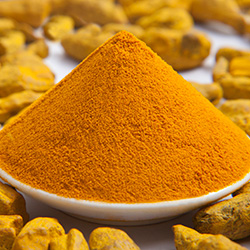
 Curcumin is a powerful antioxidant and anti-inflammatory spice. Inflammation plays a role in many eye conditions, including uveitis, glaucoma, and macular degeneration. Used for millennia in Indian cooking, curcumin is the main ingredient in turmeric. Turmeric gives mustard its yellow color. When combined with black pepper, this spice is easier to absorb. You can use turmeric in cooking and take it as a supplement.
Uveitis Curcumin Study
Uveitis is inflammation of the uvea, the eye’s middle layer. Symptoms may include redness, floaters, sensitivity to light, blurring or pain. Untreated, uveitis can permanently damage vision. In a small study,1 uveitis patients who had curcumin alone had no side-effects and less recurrence. Conversely, patients given the spice with an antitubercular treatment had side-effects and a higher recurrence rate.
Glaucoma Study
Optic nerve damage from glaucoma has several probable causes, including oxidative stress. Curcumin protected the optic nerve against oxidative damage in a study.2
- In animal embryos, neuro-protective microglia cell tissue was exposed to oxidative stress. Curcumin provided statistically significant protection against damage.
- Elevated IOP is associated with many cases of glaucoma. Scientists induced mildly elevated intra-ocular pressure (IOP) in animals. The animals who ingested curcumin had less pressure increase than the controls.
Macular Degeneration Studies
The macula breaks down in macular degeneration, resulting in central vision loss. The protein vascular endothelial growth factor (VEGF) might be valuable because it regulates cell death. Therefore, VEGF is the subject of many new studies. Researchers have found that curcumin inhibits VEGF and cell death.3 Blue light damage from the sun is a suspected contributor to macular degeneration. Curcumin helped prevent damage to human retinal pigment cells.4
Important Note: Before taking turmeric supplements check with your doctor if you are taking a blood thinner. While adding a bit of turmeric to your cooking is usually ok, more concentrated forms have a lot of punch. Curcumin, the active ingredient of turmeric is a blood thinner.
- Lal, B., Kapoor, A.K., Asthana, O.P., Agrawal, P.K., Prasad, R., et al. (1999). Efficacy of curcumin in the management of chronic anterior uveitis. Phytother Res. Jun;13(4):318-22. ↩
- Yue, Y.K., Mo, B., Zhao, J., Yu, Y.J., Liu, L., et al. (2014). Neuroprotective effect of curcumin against oxidative damage in BV-2 microglia and high intraocular pressure animal model. J Ocul Pharmacol Ther. Oct;30(8):657-64. ↩
- Saberi-Karimian, M., Katsiki, M., Caraglia, M., Boccellino, M., Majeed, M., et al. (2017). Vascular endothelial growth factor: An important molecular target of curcumin. Crit Rev Food Sci Nutr. Aug 30:1-14. ↩
- Park, S.I., Lee, E.H., Kim, S.R., Jang, Y.P. (2017). Anti-apoptotic effects of Curcuma longa L. extract and its curcuminoids against blue light-induced cytotoxicity in A2E-laden human retinal pigment epithelial cells. J Pharm Pharacol. Mar;69(3):334-340. ↩
